
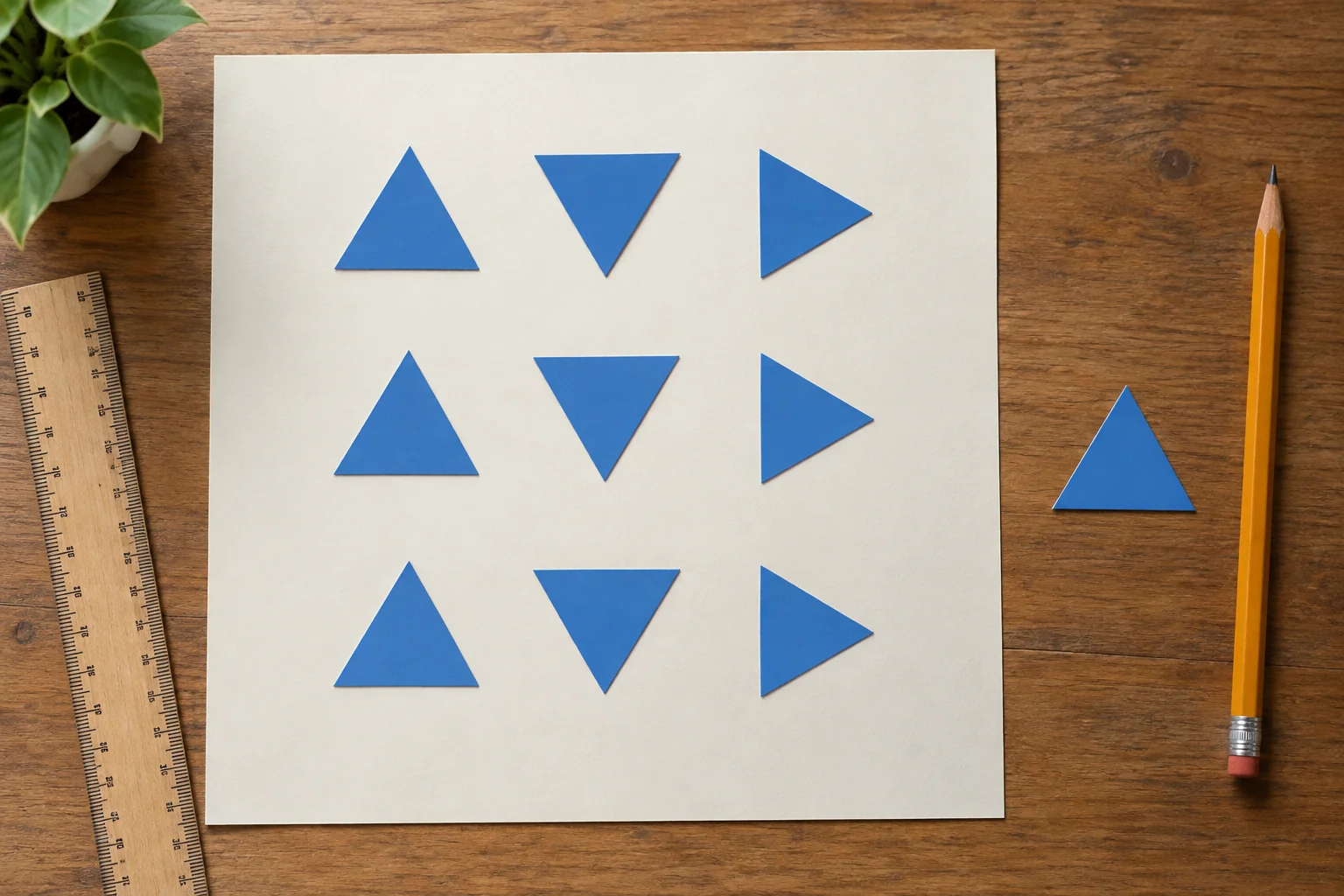
A pattern can begin with one simple shape. Repeating it in different orientations reveals how sequence and spacing change the overall impression. This exercise uses a triangle as a reference and tries three directions without changing its size or geometry.
Prepare paper, a pencil, and a familiar colouring tool. You do not need to fill the whole page. A few short rows are enough for comparison. The aim is to understand the relationship between a fixed shape, changing orientation, and the space between repetitions before adding other variations.
Make one reference shape
Draw a triangle that is easy to repeat. Choose a size that leaves room for several shapes in one row. It does not need to be calculated with a formula; the reference should simply be clear and reusable. If using a paper cut-out as a guide, prepare it with methods appropriate to the participant’s age and available tools.
Notice the side lengths and angles that define your triangle. Keep the reference at the page edge. Avoid drawing every repeat from memory because dimensions may change unnoticed. The exercise is easier to read when only one variable changes.
Choose one colour for the initial trial. A fixed colour keeps attention on direction and arrangement. Adding several colours immediately makes it harder to tell whether an impression comes from colour or position.
Choose the shape and three directions
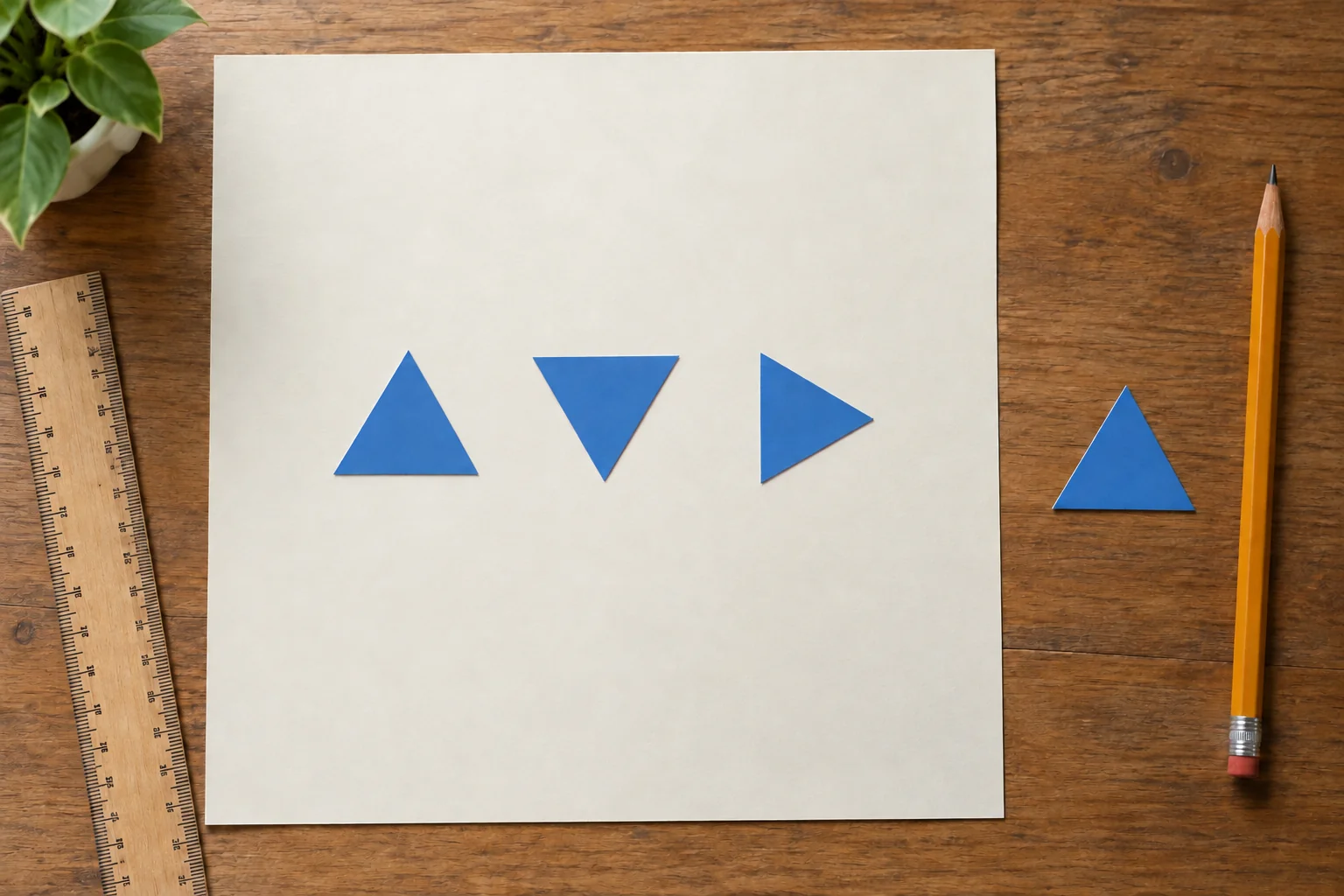
Make three examples with the triangle pointing up, down, and right. All use the same shape and size. Leave enough space to distinguish the directions clearly. You may write orientation names outside the pattern area as a reminder.
Compare the examples before arranging a row. Has the right-pointing triangle become longer? If so, correct it using the reference. Orientation is the variable being changed, so an unintended size change should be separated from the exercise.
Choose a first sequence, such as up, down, right. Say or write it, then repeat it once. This identifies a group that becomes the pattern’s foundation. No particular sequence is required; the starting choice simply needs to be repeatable.
Arrange a sequence and check its spacing
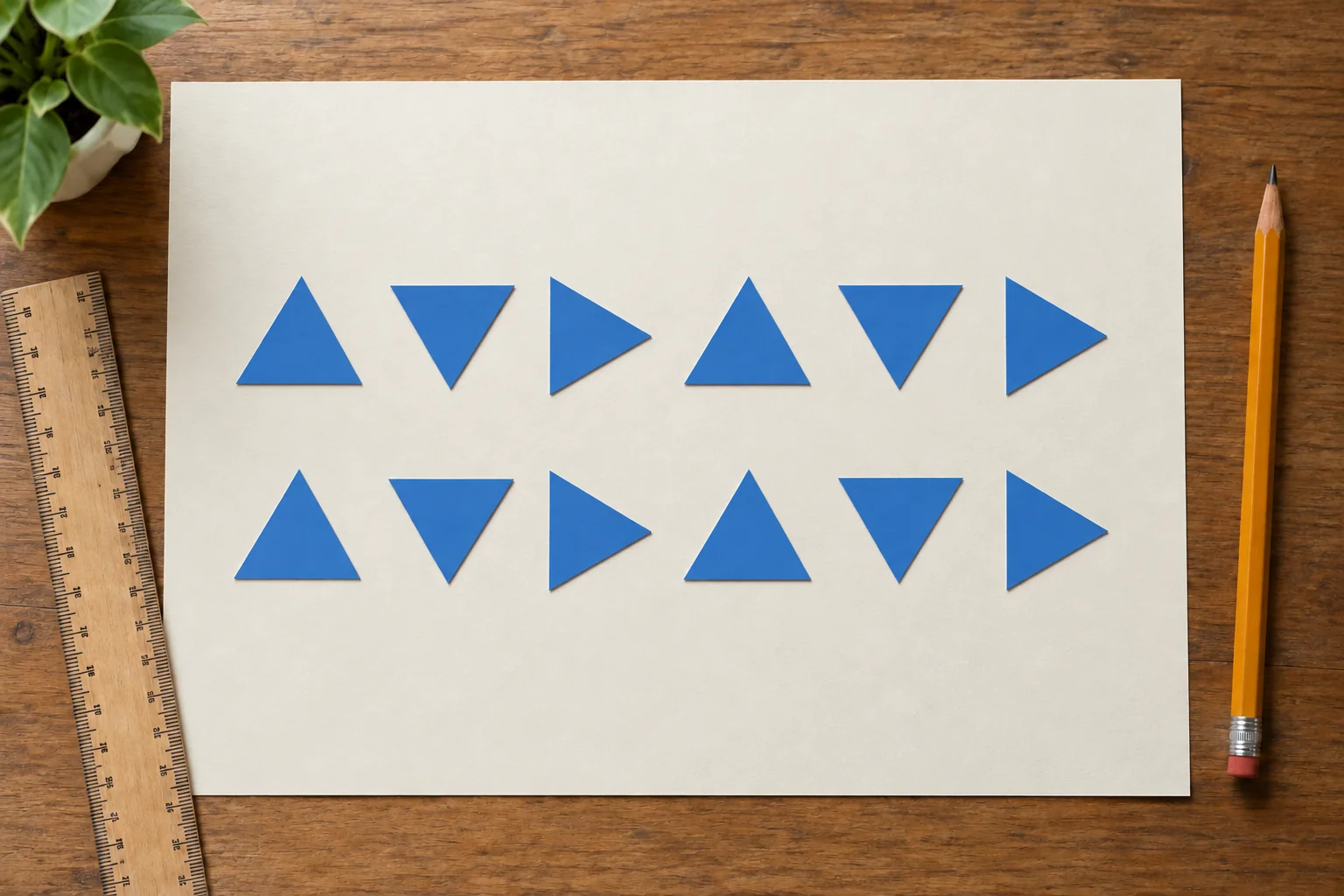
Draw the first row by repeating the three-direction group. Keep reasonably consistent space between shapes. Two groups will produce six triangles. Begin with a small number so observation does not become a long copying task.
Look at the visible spaces between triangle tips and sides. Equal centre distances do not necessarily make the gaps look identical when orientations differ. For a hand-drawn exercise, observe the spaces visually and note areas that seem too tight or too open.
Continue with a second row using the same sequence. Try to preserve group beginnings and the distance between rows. Two rows help show whether the pattern reads as an organised arrangement or as separate individual shapes.
Compare one arrangement change
When the initial pattern is clear enough, make a small trial elsewhere on the page. Change one factor, such as the sequence becoming up, right, down. Preserve shape, size, colour, and the number of repeats. The comparison then remains focused on sequence.
Another trial can change spacing while keeping the order. Make a row with wider gaps and observe how its rhythm feels. Avoid changing order and spacing together in the first comparison; the aim is to understand each choice.
| Trial | What stays fixed | What changes |
|---|---|---|
| Orientation sequence | Shape, size, colour, and spacing | Order of three directions |
| Spacing | Shape, size, colour, and sequence | Space between shapes |
| Row beginning | Group and spacing | Group starting position |
This table helps choose the next experiment. One exercise does not need to try every option in a single session.
Read the rhythm from different distances
Look closely to inspect edges and gaps. Then move the page slightly away to see the overall arrangement. Note whether your eye follows the three-direction group easily or stops on a particular shape.
If something stands out, look for its cause. A shape may be larger, its colour darker, or its gap different. Not every irregularity needs correction. Recognise it first, then decide whether to retain it as an accent.
Avoid judging the exercise only by neatness. Hand-drawn lines that are not identical can still show a clear pattern. Focus on whether direction and spacing choices are visible in the way the planned trial intended.
Keep the reference for another pattern
Write the chosen sequence and one observation beside the result. Wider gaps might make groups easier to separate, or changing the beginning of a row might alter the reading direction. These notes help when trying a pattern on a card, drawing page, or another surface.
At Zumen, shape exploration can continue through other art and drawing exercises. Use a simple pattern to try visual decisions rather than expecting a finished design in one step.
One consistent shape gives experimentation a useful foundation. By limiting changes to orientation, sequence, or spacing, you can see which choice makes the pattern feel ordered, moving, or accented in a way you want to develop.